

Running is one of the simplest and most effective ways to stay fit, improve cardiovascular health, and reduce stress. However, many runners—both beginners and experienced athletes—make the mistake of choosing the wrong running shoes. The right pair can improve comfort, performance, and injury prevention, while the wrong choice can lead to discomfort, blisters, and even long-term joint problems.
If you’re planning to invest in a new pair of running shoes, avoid these five common mistakes to ensure you make the right decision.
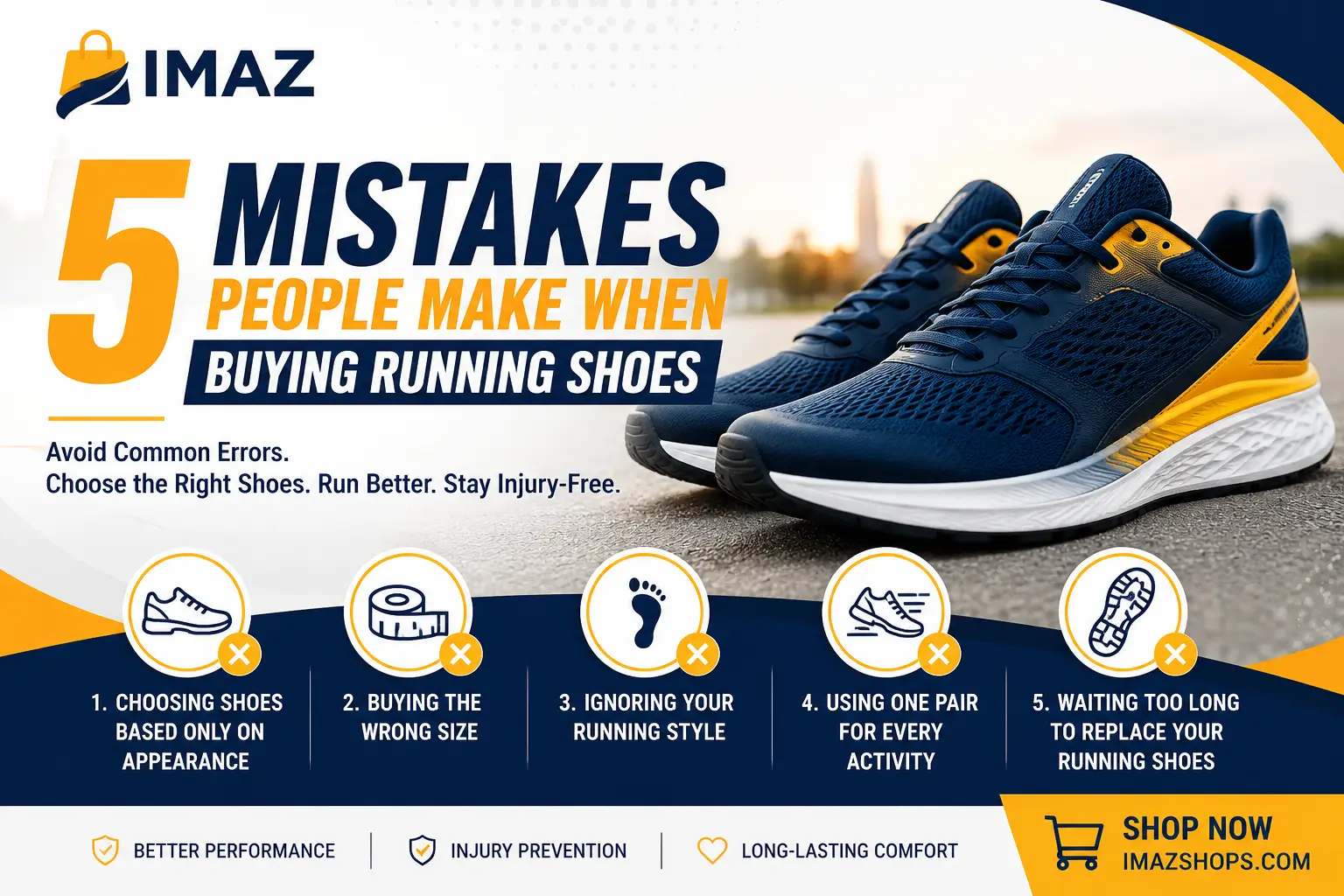
1. Choosing Shoes Based Only on Appearance
One of the biggest mistakes people make is selecting running shoes because they look stylish or match their workout outfit. While design and color are important, performance and comfort should always come first.
Every runner has unique biomechanics. A shoe that looks great may not provide the support or cushioning your feet need. Prioritize fit, stability, and comfort over aesthetics.
What to do instead:
- Focus on comfort before appearance.
- Read product specifications carefully.
- Choose shoes designed specifically for running rather than casual sneakers.
2. Buying the Wrong Shoe Size
Many people assume their everyday shoe size is also their running shoe size. In reality, your feet naturally expand during running due to increased blood flow and repeated impact.
Running shoes that are too tight can cause:
- Blisters
- Black toenails
- Foot pain
- Numbness
Shoes that are too loose may lead to instability and heel slipping.
Expert Tip:
Leave approximately a thumb’s width (about 1 cm) between your longest toe and the front of the shoe. This extra room allows your feet to expand naturally during longer runs.
3. Ignoring Your Running Style
Not all runners move the same way. Some runners have a neutral gait, while others overpronate or underpronate. Wearing shoes that don’t match your running style can increase stress on your knees, ankles, and hips.
Understanding your gait helps you choose shoes that provide the appropriate level of support.
Common categories include:
- Neutral Running Shoes
- Stability Running Shoes
- Motion Control Running Shoes
If you’re unsure, many sports shoes stores and running specialists offer gait analysis to help identify the best option.
4. Using One Pair for Every Activity
Running shoes are designed specifically for forward motion. Many people use them for gym workouts, weightlifting, hiking, walking, or court sports.
This reduces the lifespan of the shoes and may compromise performance during running.
Different activities require different footwear:
- Running Shoes for road or treadmill running
- Trail Running Shoes for off-road terrain
- Training Shoes for gym workouts
- Court Shoes for tennis, badminton, or squash
Using the right footwear for the right activity improves both safety and performance.
5. Waiting Too Long to Replace Your Running Shoes
Many runners continue wearing shoes long after the cushioning has worn out because the shoes still “look fine.”
The midsole foam gradually loses its ability to absorb impact, even if the upper appears to be in good condition.
Signs it’s time to replace your running shoes include:
- Flattened cushioning
- Uneven outsole wear
- Reduced comfort
- New aches or pains after running
Most quality running shoes typically last between 500–800 kilometers (300–500 miles), depending on factors such as body weight, running surface, shoe construction, and running style.
Keeping track of your running distance can help you know when it’s time for a replacement.
Bonus Tips for Buying the Right Running Shoes
To make a smarter purchase:
- Shop later in the day when your feet are naturally slightly larger.
- Wear the same socks you normally run in.
- Test both shoes before buying.
- Walk or jog briefly if possible.
- Choose shoes designed for your preferred running surface (road, trail, or track).
- Consider the level of cushioning based on your comfort preference and training goals.
Why Choosing the Right Running Shoes Matters
The right running shoes do more than improve comfort—they help support proper movement, reduce fatigue, and lower the risk of common running-related injuries. Investing in quality footwear is an investment in your long-term health and performance.
Whether you’re preparing for your first 5K, training for a marathon, or simply enjoying daily jogs, selecting shoes that match your feet and running style can make every run more enjoyable.
Find Quality Running Shoes at Imaz Shops
At Imaz Shops, we offer a carefully selected range of running shoes from trusted sports brands to suit beginners, fitness enthusiasts, and experienced runners alike. Whether you’re looking for lightweight speed shoes, cushioned daily trainers, or supportive stability models, you’ll find options designed for comfort, durability, and performance.
Explore our latest collection and choose the running shoes that help you perform at your best.
Frequently Asked Questions (FAQs)
How often should I replace my running shoes?
Most running shoes should be replaced after approximately 500–800 kilometers (300–500 miles) of use, although this varies depending on running habits, terrain, body weight, and shoe design.
Should running shoes be one size bigger?
Many runners prefer running shoes that provide about a thumb’s width of extra space in front of the toes to accommodate natural foot expansion during exercise.
Can I use running shoes for walking?
Yes. Running shoes generally provide excellent cushioning and comfort for walking, although dedicated walking shoes may offer features better suited for prolonged walking.
Are expensive running shoes always better?
Not necessarily. The best running shoe is the one that fits your foot properly, supports your running style, and feels comfortable during use—not simply the one with the highest price tag.
Conclusion
Avoiding these common mistakes can help you choose running shoes that fit correctly, support your running style, and last longer. Rather than focusing only on appearance or price, prioritize comfort, fit, purpose, and quality. Making an informed decision today can lead to better performance and more enjoyable runs tomorrow.